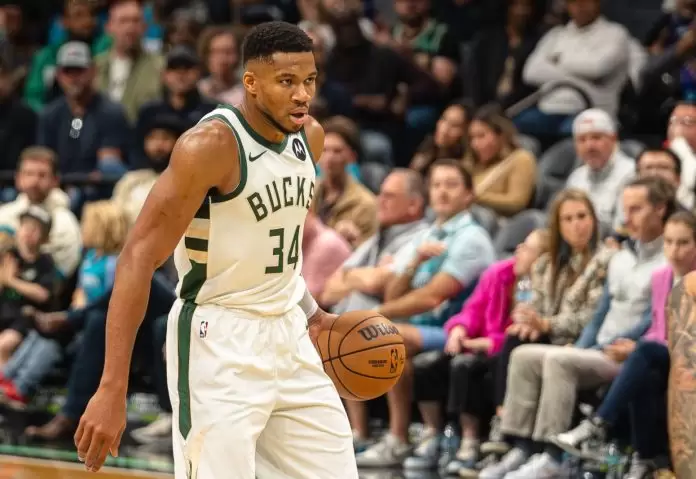
The offseason discussion around Giannis Antetokounmpo continues to grow, and the Oklahoma City Thunder have been loosely connected to that conversation despite strong internal continuity and a 64–18 regular season.
Reporting for The Athletic, Sam Amick noted that “league sources have long maintained” Oklahoma City is not expected to be part of the Antetokounmpo trade market, even after a Western Conference finals exit that ended in a 4–3 series loss to the San Antonio Spurs.
That result came after a postseason run where Shai Gilgeous-Alexander led the Thunder with consistent scoring production and Chet Holmgren anchored both ends of the floor, while the roster’s depth helped Oklahoma City reach the league’s best regular-season record.
NBA insider Brandon “Scoop B” Robinson has previously outlined the structural logic behind why a franchise in Oklahoma City’s position could evaluate a move for a top-tier star. He highlighted the Thunder’s long-term draft flexibility and argued that a team with extensive future assets can theoretically engage in high-impact trades without fully stripping its roster foundation.
From a roster construction standpoint, Oklahoma City already operates with a strong two-way core built around Gilgeous-Alexander, Holmgren, and Jalen Williams. The group has advanced through multiple playoff rounds and reached the Western Conference finals before falling short against San Antonio in Game 7.
A potential trade framework involving Antetokounmpo would require matching salary, high-end young talent, and significant draft compensation. Players such as Williams and Isaiah Hartenstein are frequently mentioned in hypothetical structures due to their contract status, positional value, and playoff roles.
Milwaukee’s perspective also shapes the conversation. The Bucks finished 32–50 and missed the postseason, creating external discussion about roster direction around their two-time MVP. However, no formal indication has been reported that Antetokounmpo is actively on the trade market.
Oklahoma City’s decision-making model has historically prioritized internal development under general manager Sam Presti, supported by a large stockpile of future first-round picks and swap rights. That asset base provides optionality, but it does not guarantee a shift toward aggressive superstar acquisition.
Any theoretical pursuit of Antetokounmpo would also need to account for fit alongside Gilgeous-Alexander and Holmgren. The current system emphasizes spacing, defensive versatility, and ball distribution across multiple creators.