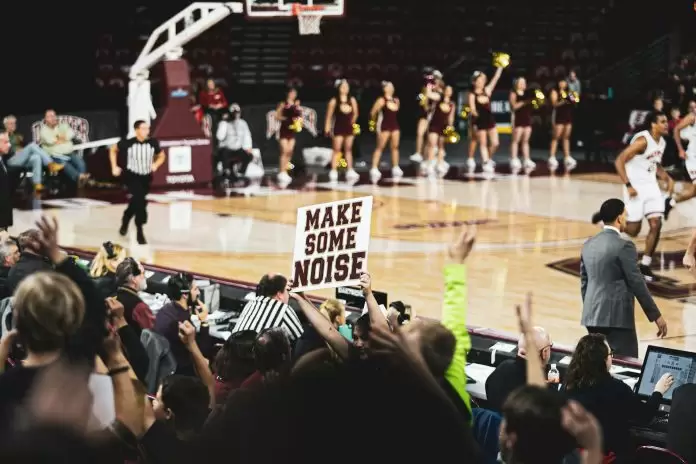
A Golden Era of Athletics and Atmosphere
While Mid-Century Modernism defined the post-war suburban dream, the 1970s brought a raw, high-contrast energy to the world of sports. Basketball, in particular, underwent a stylistic revolution during this decade. It moved away from rigid, clinical play into an era of “Showtime”–a period defined by flair, individual expression, and a distinct visual palette. The warm glow of arena lights hitting polished maple floors, the saturation of team jerseys, and the iconic silhouettes of high-top leather sneakers created a cultural blueprint that still influences how we design our leisure spaces today.
The Geometry of the Hardwood
At its core, basketball is a game of beautiful geometry. The layout of the court–with its sweeping arcs, parallel lines, and rectangular key–echoes the principles of modern architectural design. There is a tactile satisfaction in the materials of the game: the grainy texture of a leather ball, the rhythmic thud against a hardwood floor, and the metallic “snap” of a chain-link net.
Integrating these “old-school” elements into a modern home doesn’t mean building a gymnasium in your living room; it means embracing the textures and colors of that peak athletic era. Think of the rich burnt oranges, deep ochres, and forest greens that dominated the 1970s–colors that are currently seeing a massive resurgence in contemporary interior styling.
Read also: Retro Interior Design: Bringing Back the Charm of the ’70s in Modern Homes
From Strategy to Spectacle: The Analytical Mindset
The 1970s also marked the rise of the “Thinking Fan.” As the game became more televised, audiences began to look past the final score and into the mechanics of the win. This was the birth of modern sports analysis–the idea that a game could be decoded, predicted, and understood through patterns and historical data.
This intellectual engagement with sports has only deepened with time. Today, the concept of Football Predictions has become a primary way for fans to bridge the gap between being a passive observer and an active strategist. Much like a coach analyzing game film from 1975 to find a tactical edge, modern enthusiasts use football predictions to apply logic and historical context to the unpredictable nature of the pitch. Whether it’s the hardwood of the NBA or the grass of the Premier League, the thrill lies in the anticipation and the calculated risk.
The Sustainable Appeal of Heritage
Why does the 1970s basketball aesthetic feel so right in 2026? It’s because it represents a move toward “slow” culture. In an age of fast fashion and disposable tech, the enduring image of a 1970s basketball court represents durability and soul. The materials used–wood, leather, canvas, and steel–are honest and lasting.
Contemporary homeowners are increasingly looking for this sense of permanence. By mixing vintage athletic memorabilia or retro-inspired color palettes with sleek, modern architecture, you create a space that feels curated rather than just “decorated.” It’s about celebrating a time when sport was a grit-and-glory pursuit, and translating that honesty into the places where we live and work.
Conclusion: A Timeless Synergy
Ultimately, the appeal of basketball’s heritage lies in its versatility. It is a sport that fits as comfortably in a gritty urban playground as it does in a high-end designer loft. By looking back at the 1970s–the colors, the strategic shifts, and the undeniable style–we find a wealth of inspiration for the modern day. It reminds us that whether we are predicting the next big win or choosing the right texture for our walls, the best results come from understanding the classics.