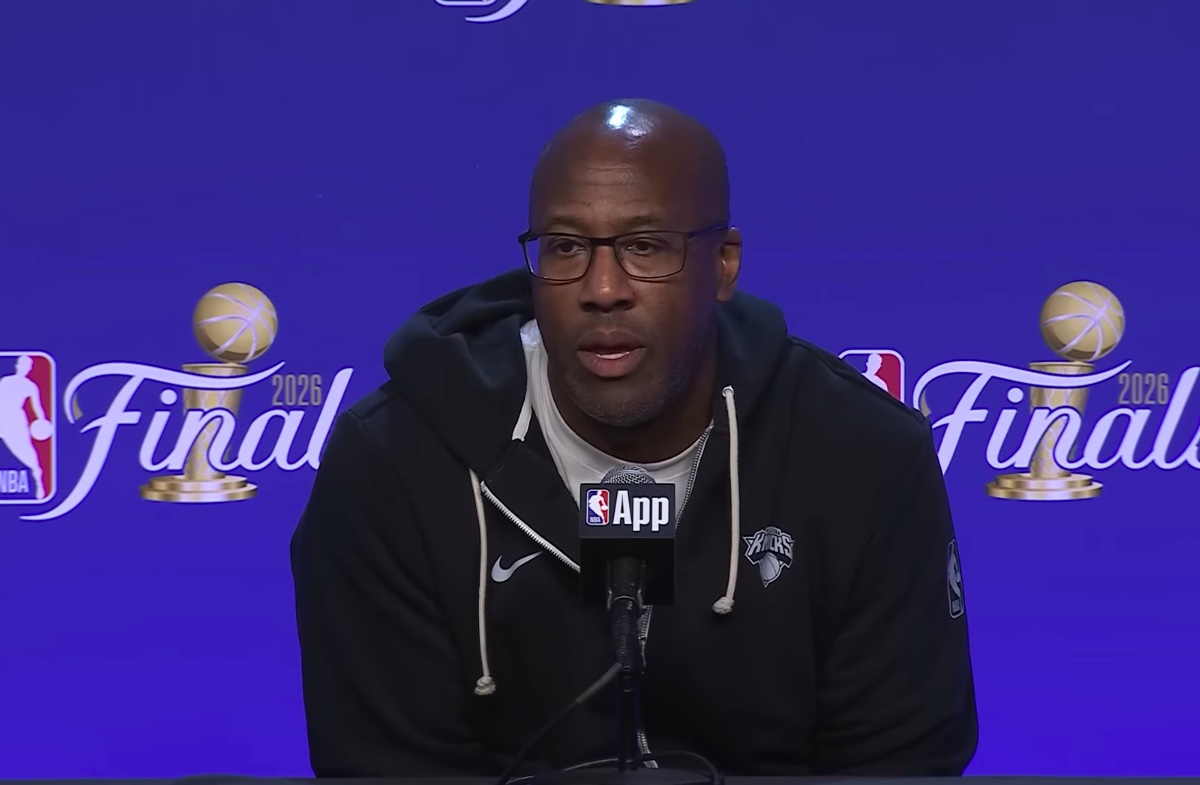
Knicks head coach Mike Brown framed his team’s mindset ahead of Game 5 of the NBA Finals against the San Antonio Spurs by emphasizing execution under pressure, saying, “Their level of maturity.” He added, “We have some, obviously we have some veteran guys on the team, but you can be a veteran and still have a little bit of immaturity about you, as we all know.”
Brown stressed how consistency has shaped New York’s closeout performances, saying, “And we’ve been preaching all year, it’s about the next possession, the next possession, the next possession.” He also pointed to situational pressure on the road, noting, “We understand anytime you try to play a closeout game, the level of desperation for your opponents is increased. The level of desperation for the fans of your opponents is increased.”
He expanded on the margins required to finish a series, saying, “And you have to bring your best effort, because even if you bring your best effort, it may not happen, especially on the road. But that’s the only way you have a chance for it to happen.”
Discussing mindset across a playoff run that has included comeback wins, Brown reiterated focus on process over result. “The biggest thing is everybody has to stay present. You have to be present. You can’t think about the outcome. It’s about the process, the next play, the next play, the next play.” He acknowledged the volatility of that approach, adding, “And sometimes you can think about the process and it not work out.”
Brown said that internal stability has defined the Knicks’ postseason identity. “Not just this series, but our whole playoff run, because there were times when we had our backs against the wall, and there was really no panic. There was no panic from ownership, from Leon, from the staff, all the way down through the players.” He credited consistency across the organization, including team president Leon Rose, saying, “And a lot of it starts with the players. And they’ve been great at trusting or continuing to believe in the process in each other.”
Looking at execution in tight games, Brown emphasized adaptability, saying, “You got to try to find a way. You got to try to find a way, whether it’s by one point, a half a point, if they give half points, or 10 points. You got to try to find a way.”
He also addressed the challenge of emotional reset after big wins, saying, “It is hard. We’re all human. And it was hard even in the series that we swept.” Brown added, “You win two, three, four, five games in a row and there’s a tendency to relax a little bit. And that’s just not with, that’s just in life.”
To combat that drift, he described structured reinforcement, noting, “Trying to manufacture things to help guys lock in, trying to talk to guys individually so they can continue to talk to their teammates to lock in.” He also credited Hall of Famer Patrick Ewing, saying, “Having Pat’s presence around… so he could talk to guys to continue to help them lock in from a different vantage point is all huge for us.”
Brown also highlighted the value of players like Landry Shamet, saying, “that’s the best feeling in the world to see somebody that deserves an opportunity and maybe gets passed over, passed over, passed over, and now on one of the biggest stages in the game of his craft, he steps up, he shows the world, no, I can do this.”
He expanded on that idea, saying, “you might get passed up for that promotion six straight times, but if you stay with it, stay with it, believe, believe, grind, grind, now when that opportunity’s there… it’s time for you to shine.”
Finally, Brown pointed to alignment within the organization, saying of Leon Rose, “he’s been an absolute joy to work with,” and added, “that synergy between me and him and our two wives, it helped the whole organization aligned horizontally and vertically.”