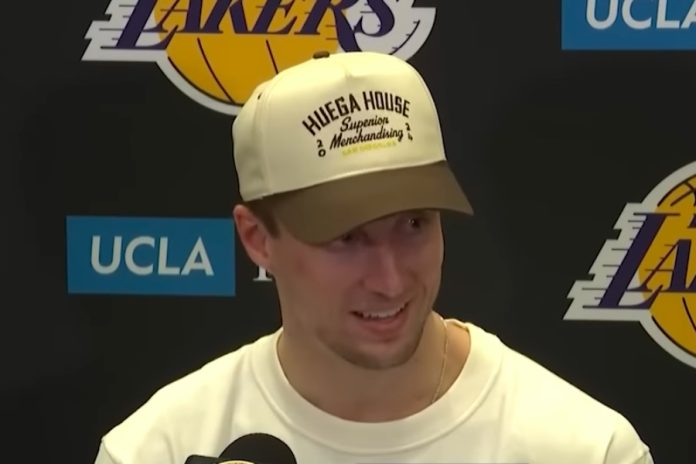
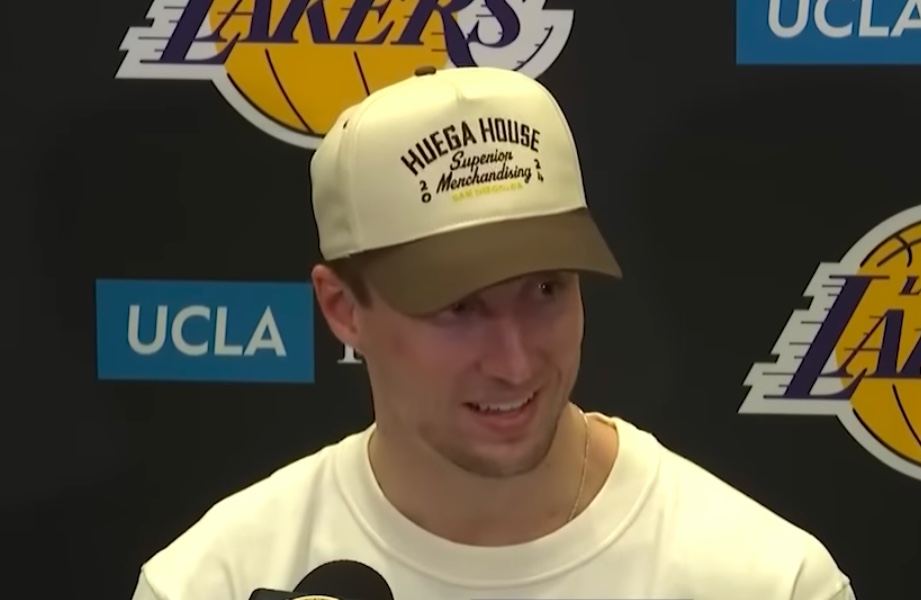
The Los Angeles Lakers left Oklahoma City down 2-0 in the Western Conference semifinals after a 125-107 loss, and Luke Kennard pointed to one factor that continues to define the series. The Thunder’s ability to turn mistakes into immediate offense has shaped both games.
“Yeah. We do a good job of capitalizing on turnovers,” Kennard said after Game 2. “That’s going to be a big thing for us.”
Oklahoma City has leaned into that identity throughout the series, forcing live-ball mistakes and converting them into transition scoring. Kennard said the Lakers knew what was coming, but execution remains the separator.
“We knew that going into it, their physicality,” he said. “We just got to stay poised, under control when they go on those runs.”
The Lakers have been competitive in stretches across both games, including taking a lead into halftime in one of the early swings of the series. Kennard said those moments show what is possible, but also what still needs to be completed over a full game.
“And I think we’ve done a pretty good job of it overall,” Kennard said. “But it’s going to take a full game, full 48 minutes.”
Los Angeles has repeatedly generated quality possessions but has not sustained them long enough to match Oklahoma City’s pace. Kennard highlighted that the difference often comes down to shot selection after breaking pressure.
“We’ve been in great positions throughout the game,” he said. “Taking the lead into halftime, which is huge, but again, we need to take care of the ball. Get great looks down the floor each time when we can and try to capitalize on those.”
A major factor in both games has been Oklahoma City’s second unit, particularly its speed and defensive pressure. Kennard pointed to the Thunder’s bench groups as a consistent swing point.
“Those guys come in, they’re a spark for them on the floor and we know that,” he said. “They’ve won those minutes and that’s on us.”
When asked about how the Lakers can respond, Kennard was direct about responsibility and adjustment, especially when Shai Gilgeous-Alexander is off the floor. The Thunder have still controlled those minutes despite their MVP’s absence at times.
“We got to be better with that and try to take them out when we can,” he said. “Especially when Shai is out of the game. They’ve won those minutes and that’s on us. It’s on me.”
Kennard emphasized that the adjustment is not just tactical, but physical. He said the Lakers must raise their level of contact and resistance to prevent Oklahoma City from dictating tempo.
“We need to up our physicality,” Kennard said. “When Shai’s off the floor, we really got to sit down and guard and try to take some of those guys out.”
With the series shifting to Los Angeles for Game 3, Kennard said the focus must be on execution rather than external factors, including officiating discussions that have surrounded both games.
“We don’t make calls or anything like that,” he said. “We need to stay in the game, keep our head in the game, and be poised under control.”
He added that emotional swings cannot interrupt structure, especially against a defending champion team that thrives on momentum.
“It’s a game of runs,” Kennard said. “We can’t let calls or mistakes, turnovers affect how we play and how we execute.”
Despite the 0-2 deficit, Kennard said the approach does not change heading into the next game at home. The Lakers will need to protect their court while trying to slow Oklahoma City’s rhythm.
“We got to go home and protect home court,” he said. “We’ve done a decent job of that so far in the playoffs and that’s just got to be our mindset.”
Game 3 now becomes a critical response point, with Los Angeles needing cleaner possessions, stronger defensive resistance, and a full 48-minute effort to avoid falling deeper into the series hole.