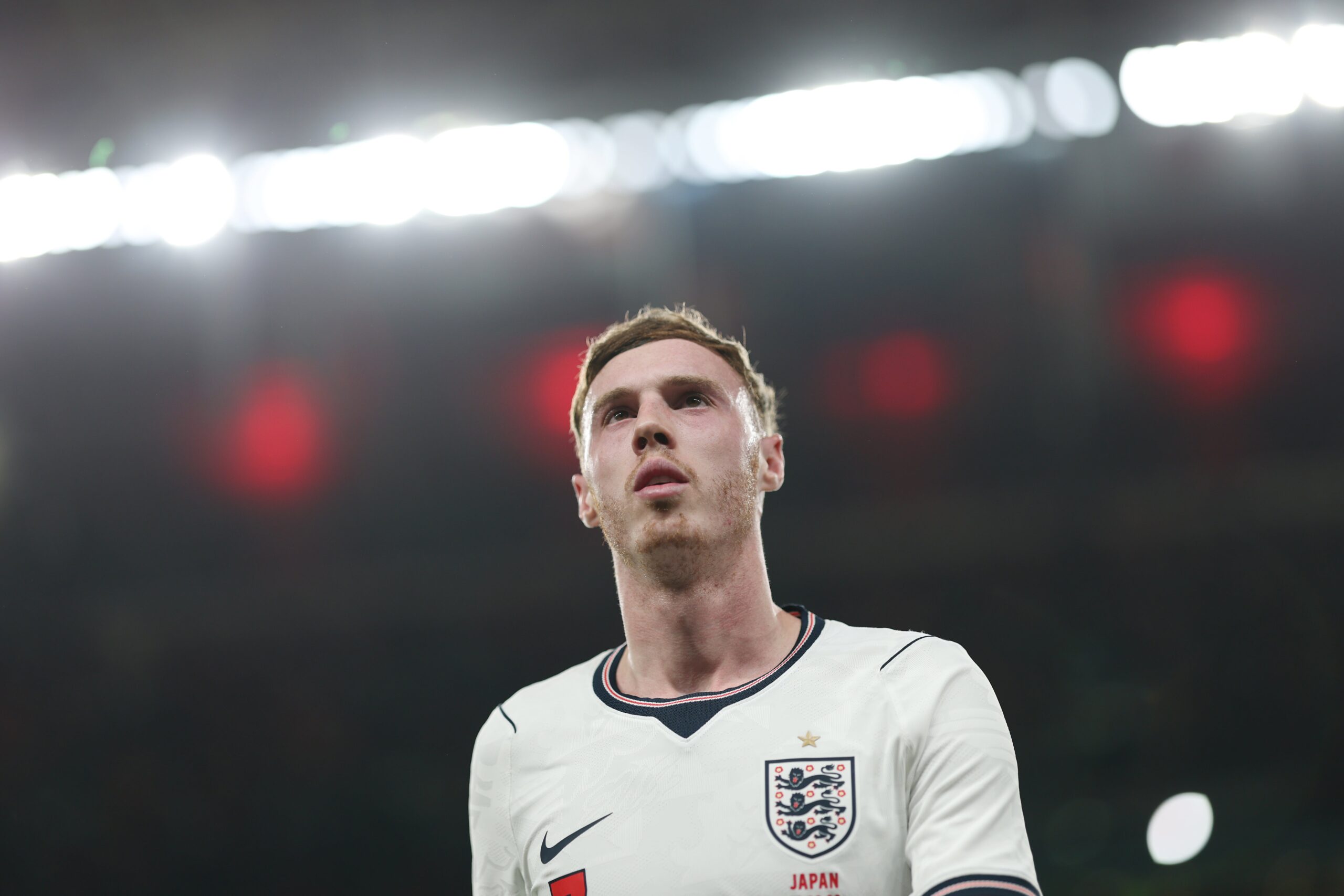
Thomas Tuchel was almost wistful in the way he described leaving out Phil Foden from his World Cup squad, like letting go of a cherished treasure. By contrast, his description of the decision to leave out Cole Palmer was a little more blunt.
“I think he suffers from, first of all, a lack of individual form within his club (Chelsea),” Tuchel explained. “He was not as decisive or as influential as he was in the last seasons, throughout the whole season.
“Second of all, he was not very influential with us (England). His record with us was just not outstanding, not good enough to make him ‘no matter what, he is coming’. That is just the reality of it. He had to pull out several times (five different camps) injured, and when he was in camp he did not have the impact that we all wanted to push him for.”
This was ultimately the story of Palmer’s World Cup omission. There is undoubtedly a supreme player in there, Tuchel accepted. But no one had seen that player since the Club World Cup final last summer.
Tuchel warned in October that the severe groin injury Palmer suffered at the start of the season could become “chronic” if not treated carefully. When Palmer did eventually return to Chelsea’s team, in December, he was not the same player and it wasn’t just the lack of goals and assists; Tuchel noted Palmer’s stride pattern had become shorter and tighter, lacking the full range of a fully fit player.
Palmer didn’t complete 90 minutes until January, and didn’t play two 90s back to back until March. By then, Tuchel noted that Palmer’s long stride had returned. He looked more fluid. But unfortunately for both Palmer and Liam Rosenior, that was the start of a dismal run of form which led Chelsea to sack the manager. Rosenior might have hoped Palmer’s return would boost the team’s fortunes, but since mid-February, Palmer has only one Premier League goal and no assists despite regular starts.
He had a chance to play as Tuchel’s No 10 in March, against Japan, after a bright cameo off the bench against Uruguay a few days earlier. But the latter game was a dismal 1-0 defeat in which Palmer was dispossessed for Japan’s goal, and he struggled to find his groove before being replaced in the second half.
“I can find a lot of arguments to have him in the squad, a lot,” said Tuchel. “I respect his quality and his very unique personality, he was never a problem in camp. I think his personality helps him, even, in big moments to not show nerves and to be decisive. But to have these moments you need also to be in shape, you need to be influential within this group and he has just failed to prove it on a consistent level.”
That is not to say that Tuchel found it easy to leave out Palmer. They seemed to share a warm relationship, and the manager was frequently seen cuddling the Chelsea player during training sessions. “It was one of my most difficult phone calls,” Tuchel said.
But ultimately, with Jude Bellingham and Morgan Rogers baked into the squad, it was a decision between Eberechi Eze and Cole Palmer as the spare attacking midfielder. Whoever Tuchel chose was likely to be spending much of the summer on the bench, and perhaps Eze – who has performed that role with a smile for Arsenal this season – felt like a better fit than Palmer.
“We chose for Jude Bellingham, for Morgan Rogers and for Ebs on his position, so he competes on the position where it’s maybe the most difficult to compete for,” Tuchel said. And there was no room on the right wing, either. Where Gareth Southgate chose to shoehorn in his best attacking players at Euro 2024, to little effect, Tuchel decided to take round pegs for round holes.
“Obviously he’s one of the most prominent names that we leave out, but I refuse to bring players for the name and I refuse to then play them out of position just to give them something. I prefer to have the tough decision beforehand, digest it and then push everyone else.”