The Charlotte Hornets are being viewed as a potential aggressive mover in the 2026 NBA Draft, with league buzz pointing toward a possible climb up the lottery board as they hold multiple first-round assets.
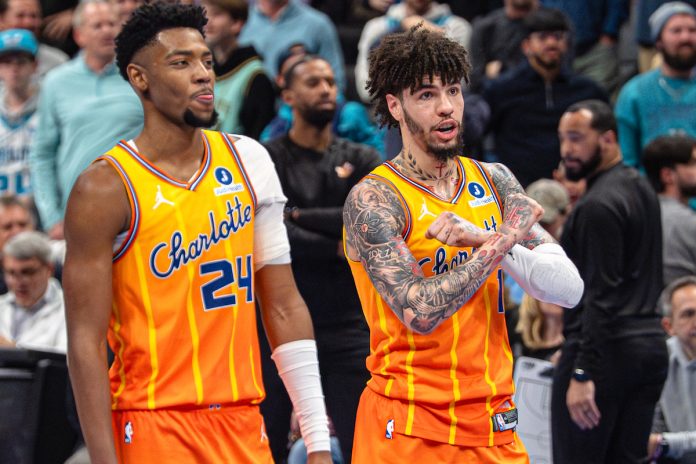
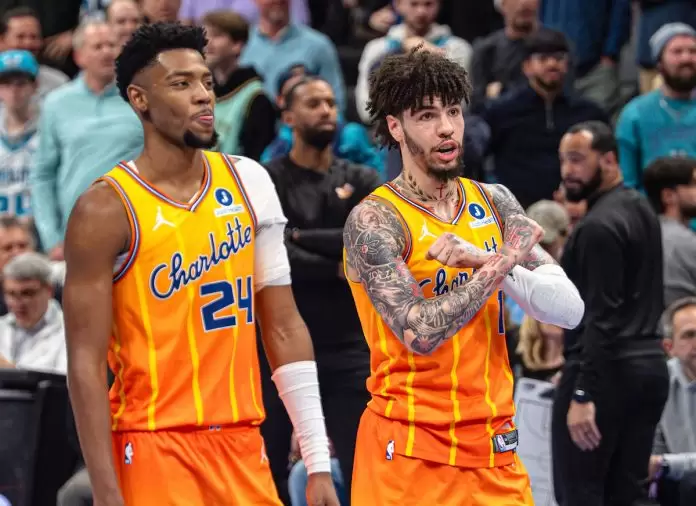
According to NBA insider Evan Sidery, the franchise is monitoring trade-up scenarios after securing picks at Nos. 14 and 18. The approach signals an attempt to accelerate a rebuild built around LaMelo Ball, Brandon Miller, and Kon Knueppel.
The discussion inside league circles centers on positioning for a high-impact interior presence, with Michigan center Aday Mara emerging as a name of interest in that range. His profile as a modern big has gained attention due to his size, passing flashes, and efficient finishing around the rim.
Mara’s 2025-26 season at Michigan shows steady production growth, posting 12.1 points, 6.8 rebounds, and 2.6 blocks while shooting 66.8 percent from the field across 40 games. His role expanded significantly compared to earlier seasons at UCLA, where he operated in limited minutes as a freshman and sophomore.
Charlotte’s current roster structure highlights perimeter strength but limited interior depth. Moussa Diabate and Ryan Kalkbrenner have provided minutes at center, but neither has consistently anchored defensive possessions in high-pressure late-game situations.
The Hornets’ offensive identity already leans heavily on shot creation from Ball, who averaged 20.1 points and 7.1 assists, while Miller and Knueppel both operated as high-volume perimeter scorers. That spacing-heavy structure increases the value of a rim-protecting center who can finish plays efficiently rather than dominate usage.
A trade-up scenario would require Charlotte to package its two first-round selections and potentially future draft capital. The front office would be weighing the cost against the value of securing a long-term interior anchor in a draft class widely viewed as top-heavy, with AJ Dybantsa leading projections.
The 2026 draft landscape adds urgency, with Washington holding the No. 1 pick and multiple teams above Charlotte likely targeting guards and wings rather than traditional centers. That dynamic could create a narrow window for movement if a targeted big begins to slip.
Charlotte’s decision timeline will likely hinge on how front offices evaluate the gap between prospects in the 5–10 range and the tier available at 14 and 18. Internal evaluations will determine whether standing pat or moving up better aligns with the current roster core.
With draft night approaching on June 23 in Brooklyn, the Hornets enter the pre-draft process positioned as one of the more flexible lottery teams, with the potential to reshape their roster direction through a single transaction.