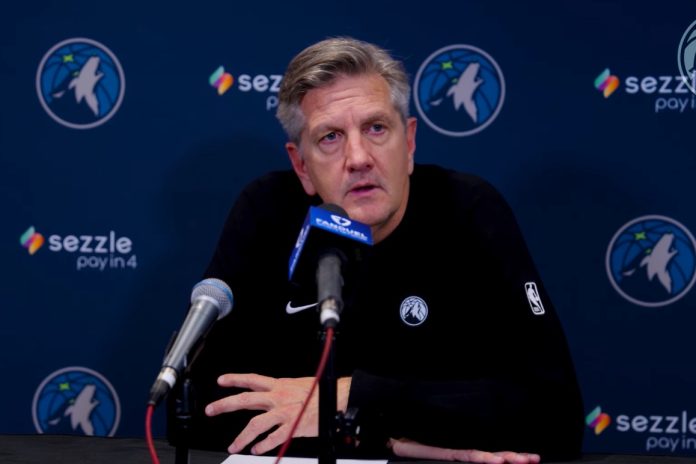
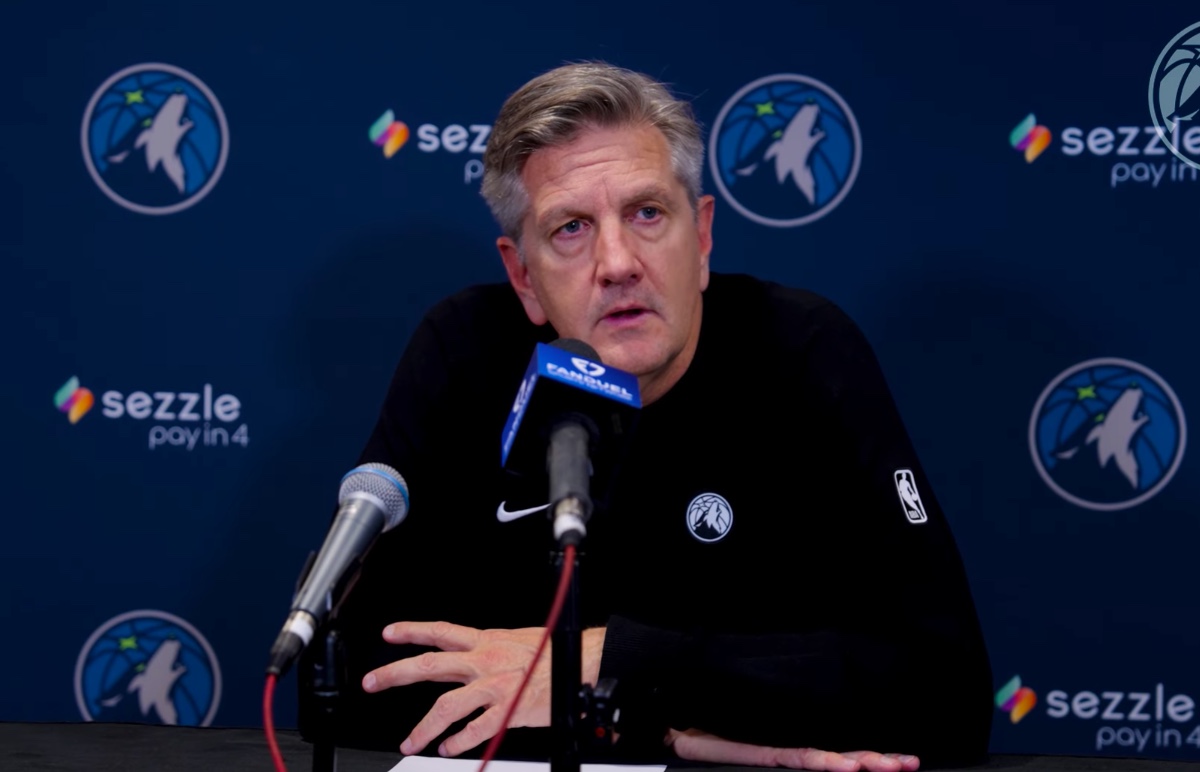
The Minnesota Timberwolves are one loss away from elimination, and head coach Chris Finch made it clear Thursday that execution, resilience and shot confidence will decide whether the series returns to San Antonio.
Speaking ahead of Friday night’s Game 6 at Target Center, Finch repeatedly pointed to Minnesota’s offensive inconsistency after the Timberwolves were routed 126-97 in Game 5. The Spurs lead the Western Conference semifinal series 3-2.
“We’ve been better when we’ve had our backs against the wall for years now,” Finch said. “It’s just part of our character. So, we’re going to need that for sure.”
Minnesota’s offense has struggled to maintain rhythm against San Antonio’s length, particularly with Victor Wembanyama protecting the paint. Finch said the Timberwolves have passed up open perimeter looks too often, especially after spending much of the postseason attacking the rim.
“Those shots have been there all series,” Finch said. “We got to take them. We can’t turn them down.”
Finch added that one of his players “passed up a few earlier in the series” and stressed the importance of staying aggressive from outside after shooting the ball “all season at a high rate.”
The Timberwolves shot just 39.1% from the field in Game 5 and were overwhelmed by San Antonio’s transition offense and interior size. Finch believes spacing has become one of the biggest issues when Minnesota’s offense stalls.
“I think guys, too much ISO, guys start drifting around not realizing where they are on the floor,” Finch said. “And then sometimes it’s just kind of sloppy execution.”
Minnesota found better rhythm offensively during stretches of the third quarter in Game 5, according to Finch, because the Timberwolves created cleaner passing outlets around Anthony Edwards.
“They were pretty heavy in the gaps around Ant in particular,” Finch said. “So we were able to space a little bit better around him, give him cleaner outlets, and just kind of found open shots for each other.”
Edwards enters Game 6 averaging 21.3 points during the postseason, though he has faced constant double teams and extra defensive attention from San Antonio throughout the series. Finch said Minnesota must help its star guard by generating more opportunities for him.
“We just got to get him a lot more shots,” Finch said. “We know they’re going to try to throw multiple bodies and multiple looks at him.”
Defensively, Finch discussed the challenge of slowing Wembanyama, who is averaging 20.4 points, 11.2 rebounds and 4.2 blocks in the playoffs. Finch specifically mentioned Julius Randle and Jaden McDaniels as important defenders when Minnesota can avoid foul trouble.
“Anytime we’ve made a mistake around him with regards to executing the coverages to help [Rudy Gobert], we’ve paid for it,” Finch said.
Finch also praised veteran point guard Mike Conley, who leads Minnesota in playoff plus-minus despite averaging only 4.3 points in 13.5 minutes per game.
“If you go back and look at the history of us in the playoffs, Mike usually leads us in plus-minus,” Finch said. “Most plus-minus numbers are led by defense. Mike is outstanding at this time of the season because he doesn’t make any mistakes on the defensive end of the floor.”
Minnesota will enter Friday’s elimination game without Donte DiVincenzo, who remains out after Achilles tendon repair surgery. San Antonio has no players listed on the injury report.
Game 6 tips off Friday at 8 p.m. ET in Minneapolis, with the Timberwolves attempting to force a Game 7 back in San Antonio.