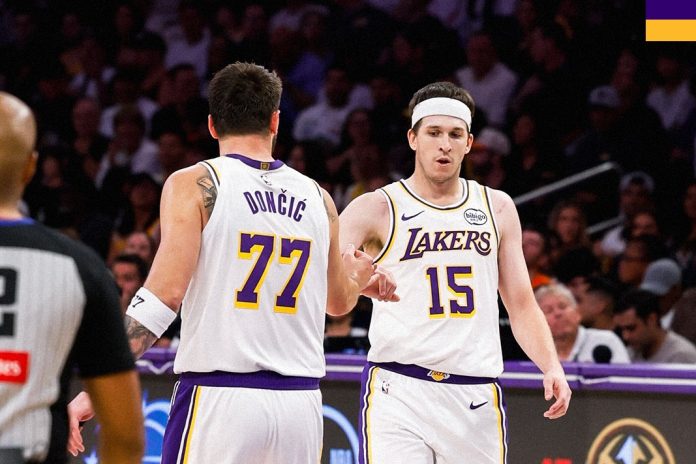
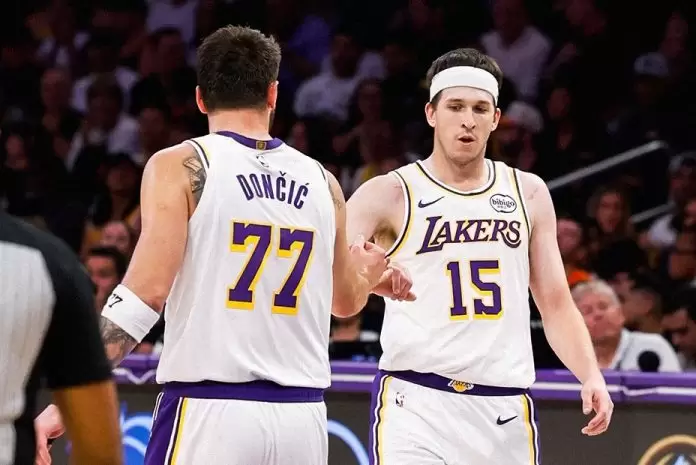
The future of Austin Reaves is becoming a central storyline for the Los Angeles Lakers as the 28-year-old guard positions himself for a maximum contract extension. League conversations indicate the negotiation window could define both his market value and the team’s long-term roster structure.
According to Brad Turner in an interview on Spectrum SportsNet, Reaves stands to be eligible for a five-year, $241 million extension if he remains with the Lakers. Turner also noted alternative pathways in free agency, including a four-year deal projected at $178 million from rival teams such as the Chicago Bulls or the Brooklyn Nets.
Turner also stated that Reaves “wants the max,” while adding that his representatives are expected to pursue the strongest possible financial outcome. The reporting also indicated uncertainty about whether a team-friendly discount with Los Angeles is realistic under current market conditions.
Reaves is currently on a player option worth nearly $15 million for the upcoming season. That option is part of the final year of a four-year, $53.8 million contract, placing his next decision cycle at a critical financial turning point.
On the court, Reaves delivered strong production during the 2025–26 regular season before injury disrupted his momentum. He averaged career-high 23.3 points, 5.5 assists, and 4.7 rebounds in 51 games, while shooting 49.0 percent from the field and 36.0 percent from three-point range.
His offensive role expanded significantly alongside Luka Doncic, forming a primary backcourt pairing that carried a large share of the Lakers’ creation workload. The two-guard configuration became a focal point of Los Angeles’ half-court offense.
The Lakers finished 53–29 in the Western Conference, securing the Pacific Division title but entering the offseason under organizational evaluation following playoff expectations. The roster also includes LeBron James, whose long-term timeline continues to factor into salary cap planning.
Rival front offices are expected to monitor his situation closely, especially given the projected max-level framework and the limited number of comparable guards entering the market. The Lakers, meanwhile, face a decision between maintaining continuity and adjusting their financial structure around multiple high-usage stars.