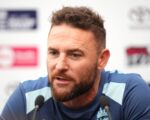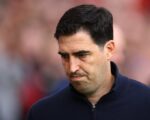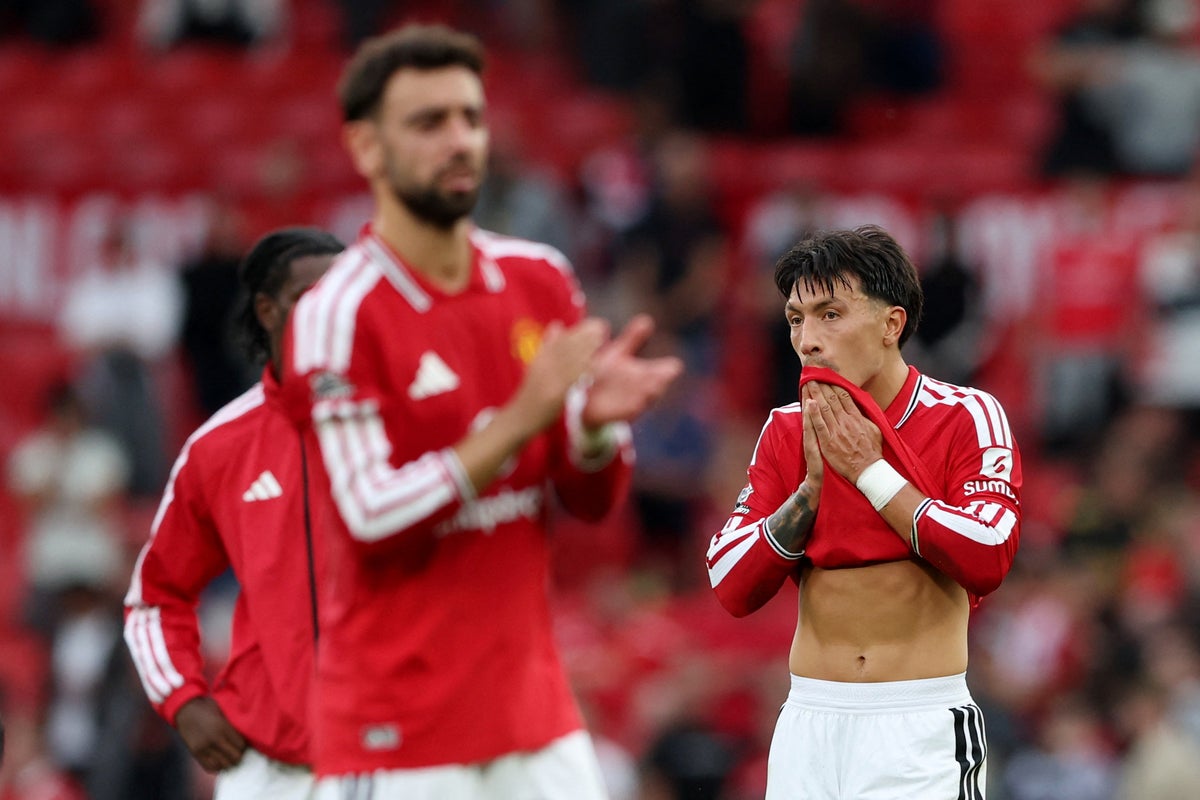
A week earlier, after an earlier Sunday that brought disappointment for Manchester United, Michael Carrick reacted to a suggestion his side had made a poor beginning to the campaign. “We haven’t started the season that bad,” he replied.
They have now. The Manchester derby can carry an importance that extends beyond points. Just ask Carrick, whose win on his return in January helped catapult him from caretaker to permanent manager. September’s demoralising defeat could carry a symbolism, reflecting how things are not clicking now Carrick has a lengthier contract.
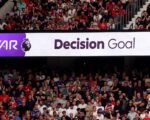
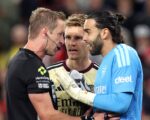
Within three hours of Sunday’s final whistle, United received an apology from ProRef, admitting Erling Haaland’s decider should have been disallowed because of the prominence of the offside Enzo Fernandez. It was described as an “error of judgement”. It wasn’t the only one; rather more came from those in the United camp.
A grievance in that instance was justified but United have lost four games under Carrick and he has complained about officials after three, while never criticising his players. That is a double standard and one that scarcely suggests United are being honest in their analysis of their own shortcomings.
That the campaign is only four games old means the sample size is small. United could take heart from expected goals tables, showing they have the second best attack and the fifth most frugal defence. Yet the actual table has them in 13th after what looked a favourable fixture list, containing dates with two promoted clubs and one with an Everton side who had a shambolic end to their transfer window. Lose at Fulham on Sunday and they could be 11 points down on Arsenal and Manchester City and out of the title race already.
So far, United have produced two wretched performances, against Hull and City, and if they were in very different circumstances, the common denominator is that Carrick’s team did too little when they were challenged with breaking down a low block. It was telling when Enzo Maresca noted that the derby became more difficult for United after Phil Foden’s 23rd-minute red card. Without being as excruciatingly bad, it had echoes of last season’s loss to Everton when Ruben Amorim’s side had no idea what to do against 10 men. For now, Carrick’s team are yet to answer the criticism they are too one-dimensional.
They counter-attacked well last season but, for swathes of the last 13 years, United have been a fine counter-attacking team. They have often found it harder to marry a dominance in possession with real incision, at least against the better sides: they have nine goals in two games against Ipswich, fresh from the Championship, and Sabah, more at home in the Azerbaijani league.
Carrick’s own choices invite scrutiny. Too many have not worked so far. Benjamin Sesko had pronounced his shin “perfect” after injury problems but was benched again and his manager delayed too long before introducing the Slovenian against Manchester City. Given the number of times Sesko is a substitute under Carrick, the sense is that the manager either isn’t convinced by the £66m signing personally or that his side benefit from having a real No 9.
Yet Matheus Cunha has floundered as a false nine; his only goal this season has come against Sabah when starting off the left. United would at least have more of a penalty-box presence if Bryan Mbeumo were leading the line. In mitigation for Carrick, he is hampered by United recruiting a forward line for Amorim; had the Portuguese seen Bruno Fernandes as a No 10, he might never have bought Cunha, whose preferred role is taken and whose second-best position is now occupied by Marcus Rashford.
In mitigation, too, Carrick is yet to see his own most expensive buy on the pitch, with Carlos Baleba not yet fit. But Andrey Santos looked a confusing signing at the time and seems more so now: the Chelsea back-up was dropped after his debut at Hull.
Carrick has spent £148m on the midfield and his first choice is the homegrown Kobbie Mainoo. The nature of the modern United is that players can be overpraised; Mainoo was for playing well against Ipswich and Sabah. He was less impressive against City’s £241m pair of Elliot Anderson and Enzo Fernandez.
Meanwhile, the faultlines in the United squad were apparent in the sight of Patrick Dorgu playing left-back against City. It was predictable that Luke Shaw would be injured, but United did not recruit an alternative. United’s defence has looked frail so far. Individually, too many players, whether Diogo Dalot and Harry Maguire at the back, Dorgu in various roles or Cunha in attack, have had undistinguished starts.
There was a theory that Carrick’s United might flounder when trying to marry Champions League football with Premier League duties. Instead, the issues began earlier, at Hull, and have continued before they have met pedigree European opposition.
United may feel luckless with the recognition Haaland’s goal should not have stood. They should not: their comeback against Ipswich, emphatic as it was, stemmed first from Marcelino Nunez slipping and then from a Maguire handball, leading to their first two goals.
In Carrick’s first derby in January, Dalot should have been sent off. There were no complaints from Carrick then; but United played genuinely well in that game. The first objective should be to do so again.