Dylan Harper says growing up in a highly competitive basketball family shaped the work ethic that carried him from Don Bosco Prep to the San Antonio Spurs and the 2026 NBA Finals.
Speaking to Brandon “Scoop B” Robinson during the inaugural Harper U basketball camp at Don Bosco Prep, Harper described how watching his older brother, Ron Harper Jr., and the rest of his family influenced his approach to the game.
“I think it’s like the mindset… for me, I’m the youngest, so I got to see everyone in their own kind of work environment,” Harper said. “I just took things that I liked, and that made me want more.”
Harper said that exposure created a simple formula for his development: observe, compete and work.
“The biggest outcome for me was just the formula of work… My work ethic, I think that’s where that comes from,” Harper said. “And I’m very competitive, so for me, it’s just wanting to be better than him, wanting to be better than her… I always wanted to one-up them.”
The competitive environment was confirmed by Harper’s mother, Maria, who described how even ordinary games inside the family home became contests.
“No one can play a game at my house without wanting to win,” Maria Harper said. “It always ends up in a fight. Doesn’t matter what it is.”
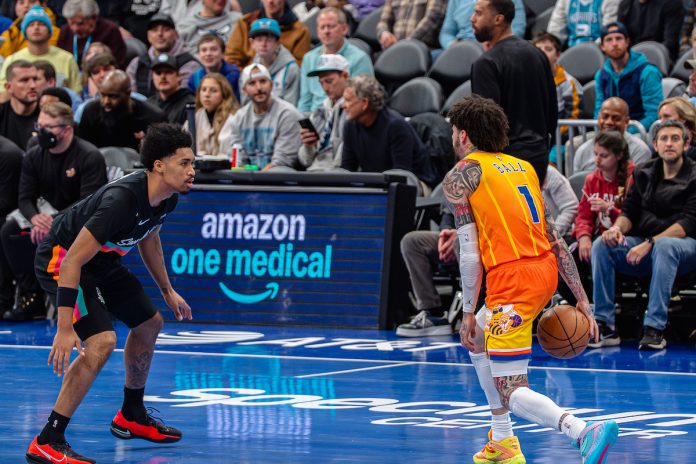
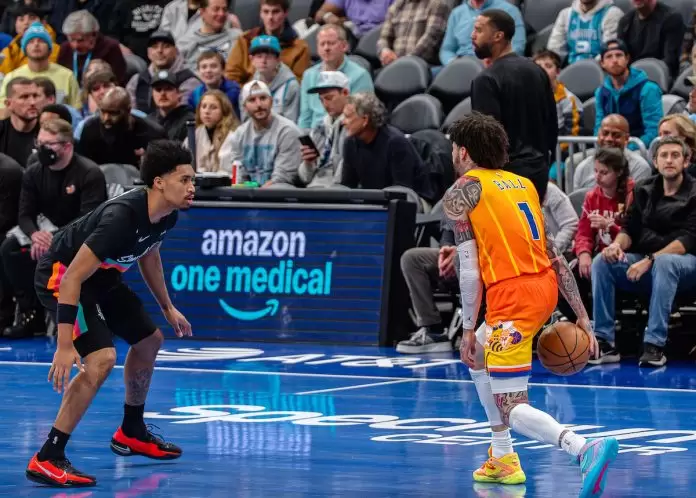
That mentality has translated quickly to the NBA for the 20-year-old guard. Harper averaged 11.8 points, 3.9 assists and 3.4 rebounds in 69 regular-season games as a rookie, shooting 50.5% from the field and 34.3% from three-point range.
His role grew during San Antonio’s playoff run. Harper appeared in all 23 postseason games and averaged 14.1 points and 5.6 rebounds in 26.7 minutes while shooting 51.5% overall, helping the Spurs advance to the NBA Finals before losing to the New York Knicks in five games.
Harper’s older brother also represents part of the family example he referenced. Ron Harper Jr. appeared in 29 games for the Boston Celtics in 2025-26, averaging 4.2 points in 11.0 minutes while shooting 35.0% from three-point range.
Boston coach Joe Mazzulla, who visited the Harper U camp, said second-generation players benefit from learning about the professional side of basketball long before reaching college or the NBA.
“I think it’s priceless,” Mazzulla said. “It’s like getting a college education in middle school.”
Mazzulla stressed that the advantage extends beyond basketball skills to “the professionalism, the mentality” and the ability to handle success and failure.
After spending time with the Harper family at Don Bosco Prep, Mazzulla connected that environment directly to Ron Harper Jr.’s development with Boston.
“Being here for 30 minutes, I see why their family is so successful,” Mazzulla said. “I see why Ron has been successful in the organization that we have, it’s because of the foundation and the environment that he has.”