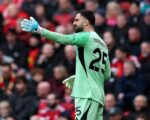
As Oliver Glasner bade farewell to Selhurst Park on Sunday, Crystal Palace chair Steve Parish paid tribute on behalf of his fellow fans. “You gave us one of the best days of our lives,” he said, citing last year’s FA Cup final. Only one of the best? Perhaps Parish had exercised a little caution because he felt something still better was yet to come.
Pep Guardiola’s Manchester City were beaten at Wembley last May; the champions Liverpool at the national stadium in August’s Community Shield. Glasner’s third and last final comes against a Rayo Vallecano team who finished eighth in LaLiga. But there is a case for arguing victory in Leipzig on Wednesday would be the best of all, not just the completion of a reign but the culmination. For clubs such as Palace, strangers to continental competition, Europe can feel mythical, something only experienced by others.
A brief foray into the 1998 Intertoto Cup aside, they had never ventured abroad for meaningful matches. Now Palace stand on the brink of a European trophy; even benefiting from Premier League revenues and starting the Conference League as the competition favourites, it will be a seismic achievement.
And one that underlines the reality the departing Glasner is a history-maker. Not since the Habsburg emperors has an Austrian achieved more at a Palace. They had not won a major trophy in the 120 years of their existence. Now they could get three in 13 months. Only one Austrian manager had ever won a European competition – the great Ernst Happel, the first coach to lift the European Cup with two clubs and reach the final with three – but now he could have company. Glasner, too, is showing his expertise in different environments. He is one game away from a personal double.
Eintracht Frankfurt’s 2021-22 Europa League glory can look the greater feat, given the competition; after all, they knocked out Barcelona in the quarter-finals, winning in Camp Nou. It wasn’t Eintracht’s first continental silverware – there was the 1980 Uefa Cup – but it was another indication of Glasner having a transformative impact at a club who rarely won much. There is other evidence he is the exception, not the norm: on Monday, Wolfsburg were relegated from the Bundesliga. Five years ago, Glasner steered them into the Champions League.
His career path is to stay for a good time, not a long time. When his Palace contract expires, it will be a fond farewell, not the fractious one that seemed on the cards in January. Glasner’s unhappiness at his captain Marc Guehi’s sale left him to say he felt “abandoned”. Yet there was a mutual interest in patching up relations.
And certainly Palace have taken an unconventional road to this point. Their demotion to the Conference League was part of John Textor’s legacy, the former co-owner’s involvement in Lyon being deemed a breach of Uefa’s multi-club ownership rules. Yet it put Palace into a more winnable competition; though it may not have looked that way when they stumbled in the league phase, losing to AEK Larnaca and Strasbourg. Include an FA Cup defeat to non-league Macclesfield in Palace’s troubled January and this had threatened to be an unhappy ending.
Palace supporters’ anger at the Austrian’s comments led to a banner: “Fans disrespected – Glasner finished.” Except he wasn’t. To his irritation, Palace sold and did not replace Guehi but Jaydee Canvot has stepped up. Jean-Philippe Mateta, who almost joined AC Milan as it seemed that, along with Guehi and Eberechi Eze going, Palace would be punished for building too good a team, instead stayed. Ismaila Sarr, an inspired choice as a replacement for Michael Olise, struck in both legs of both the quarter-final and the semi-final; should Palace lift the trophy, the Senegalese will surely be named the player of the competition.
And, Macclesfield apart, Glasner has shown he knows how to plot his way through a knockout competition. He has done it, typically, with a small core. This is Palace’s 60th game of the season. Maxence Lacroix has started 54. Four players are past 4,000 minutes, six more past 3,000.
There are questions if Glasner’s reluctance to rotate would equip him for life at a superpower; or if his 3-4-3 would, with Palace having a relatively low share of the ball – 45.9 per cent in the Premier League, still only 52.9 in the Conference League – but his players are expertly drilled. They know the system.
Some of Glasner’s finest triumphs have come as underdog and on the counter-attack. A personal spikiness with his bosses may alienate some potential employers, too, but the last few years suggest he is one of the finest managers in the European game now, an impression that will be underlined if Palace claim the Conference League. After all, only three managers have won two major European trophies in the 2020s: Carlo Ancelotti, Unai Emery and Jose Luis Mendilibar. Even adding in those who have done so since 2010 only brings in Pep Guardiola, Jose Mourinho, Diego Simeone and Zinedine Zidane.
In the Palace pantheon, meanwhile, top spot belongs to Steve Coppell, for his four spells, two promotions, third-place finish in the old Division 1 and feat of taking the Eagles to their first FA Cup final. But silverware had eluded him, and every Palace manager. Until Glasner came in. He has two medals already. Now for the hat-trick, and to sign off in style.