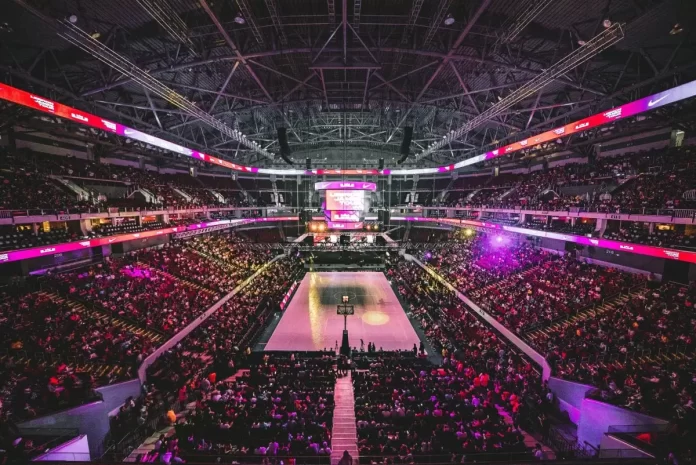
The 2026 FIBA Women’s Basketball World Cup reaches its knockout phase in Berlin on 10 September, with eight teams competing for four places in Saturday’s semi-finals. The medal games follow on Sunday, bringing a tournament that began with 16 nations to a conclusion at Berlin Arena.
Reigning champions USA face Hungary in the opening quarter-final. Belgium meet hosts Germany, while France and Spain will play the winners of the two remaining qualification games on 9 September. Those contests pair Puerto Rico with China and Italy with Australia.
The schedule leaves little recovery time. Quarter-final winners have only one rest day before the semi-finals, and the two finalists must play again the following evening. Squad depth, foul management and the ability to control minutes could matter as much as individual scoring.
Anyone following the knockout rounds through betting sites will see USA treated as the leading contender, but the group phase produced enough competitive games to discourage assumptions. Belgium remain unbeaten, Germany have won three consecutive matches and several European teams possess the size and shooting required to create problems in a single elimination game.
Can Hungary’s frontcourt trouble USA?
USA enter the quarter-finals averaging 84.7 points, 48 rebounds and 23 assists per game. Their depth allows them to maintain defensive pressure while changing line-ups, often turning a close first half into a comfortable result later in the game.
Hungary must prevent that pressure creating easy transition points. The underdogs have averaged 72.5 points and 44.3 rebounds, numbers that suggest they can compete physically even if the overall pace favours the Americans.
Dorka Juhász will be central to Hungary’s plan. She has scored 18 points per game across five appearances and gives her team a reliable option around the basket. Virág Takács-Kiss adds further size, while Réka Lelik provides movement and scoring away from the frontcourt.
Hungary’s clearest route involves controlling the defensive glass and forcing USA to play against a settled half-court defence. Second opportunities would be particularly damaging because the Americans already create enough high-percentage attempts through passing and transition.
The three-point line presents another question. Hungary have converted 34.8% of their attempts compared with USA’s 29%. That advantage will only matter if Hungary keep turnovers low and generate clean shots rather than hurried efforts late in the possession.
USA have won all four previous meetings between the nations. The most recent came at the 1986 World Championship, so those results offer little tactical value for the current teams. Hungary’s place in the last eight is already its best World Cup run in 40 years.
Why could Belgium against Germany be the quarter-final to watch?
Belgium and Germany bring contrasting strengths into their quarter-final. Belgium have yet to lose at the tournament and have made 38.1% of their three-point attempts. Germany have struggled outside the arc at 25.2%, but their bench has contributed an average of 42 points per game.
That depth could become especially valuable if the game remains close. Germany can rotate players without placing the entire scoring burden on the starting five, while Belgium have received 20.7 points per game from their reserves.
Emma Meesseman remains Belgium’s most influential player. She can score inside, pass out of double teams and bring the ball into actions that are difficult for a conventional centre to defend. Germany must decide when to send help because leaving shooters open would play directly into Belgium’s perimeter strength.
Nyara Sabally may receive much of the defensive responsibility. Her mobility gives Germany a chance to contest Meesseman’s touches without changing its entire defensive structure. She will also need to contribute at the opposite end, making the Belgian forward work on every possession.
Germany have already secured their best finish at a Women’s World Cup by reaching the quarter-finals. A home crowd should lift the intensity, although it can also increase pressure if Belgium build an early lead.
Recent meetings give both sides a useful reference. Belgium won 83-59 in the quarter-finals of Women’s EuroBasket 2025, with Meesseman scoring 30 points. Germany had beaten the Belgian Cats 83-69 at the Paris Olympics a year earlier.
Who will France meet in the last eight?
France await the winner of Puerto Rico against China. The qualification game brings together teams with very different recent World Cup records.
China reached the 2022 final and recovered from an uneven start in Berlin by beating Czechia and Italy. Centre Xu Han gives China a clear interior target, both as a scorer and a rebounder. Her height can also discourage opponents from attacking the basket directly.
Puerto Rico reached its first World Cup quarter-final in 2022 and now has the opportunity to repeat that achievement. Trinity San Antonio, Imani McGee-Stafford and Arella Guirantes carry much of the scoring responsibility.
The pace of the game should be significant. Puerto Rico will want to attack before China establish its half-court defence, while China can use its size more effectively during longer possessions. Rebounding will decide how often Puerto Rico can create those early opportunities.
France earned direct entry into the quarter-finals by finishing first in its group. The additional rest is helpful, but it also means the team will prepare for two possible opponents with limited turnaround time after Wednesday’s result.
Can Australia continue its podium record?
Australia face Italy for the remaining quarter-final place, with Spain waiting for the winner. The Opals are attempting to reach a fourth consecutive World Cup podium after collecting medals in 2014, 2018 and 2022.
Their group campaign included a defeat to Belgium, showing that experience alone will not guarantee another deep run. Ezi Magbegor remains a major threat around the rim, while Sami Whitcomb has supplied accurate outside shooting. Whitcomb converted 53.6% of her three-point attempts across five games during the qualifying tournament earlier in the year.
Italy came close to beating USA in the group stage and should not be judged only through its route into the knockout rounds. Cecilia Zandalasini can score in several ways, giving the Italians an option when structured possessions break down.
Italy are trying to reach the last eight for the first time since 1979. To do so, they must limit Australia’s second-chance points and avoid allowing Whitcomb to find rhythm beyond the arc.
Spain will enter the quarter-final with more recovery time than either possible opponent. That advantage becomes useful if Wednesday’s game is physical or decided late, but waiting for an opponent can make preparation less specific.
What will separate the contenders in Berlin?
Turnovers become more expensive during single elimination basketball because there is no second game to repair a poor performance. Teams that protect possession and force opponents into difficult half-court shots will reduce the chance of a sudden scoring run deciding the contest.
Three-point variance can still overturn the expected order. Germany’s low percentage has not stopped the hosts reaching the quarter-finals, but beating Belgium may require a noticeable improvement. Hungary face a similar calculation against USA, as matching the champions inside for 40 minutes will be difficult.
Foul trouble is another concern. The schedule rewards teams with usable depth, yet losing a starting centre or primary ball-handler during the first half can disrupt every planned rotation. Coaches may need to accept a difficult matchup temporarily rather than risk an important player collecting another foul.
The semi-finals take place on 12 September, with one scheduled for 16:30 and the other at 20:00 local time. Sunday’s bronze-medal game begins at 16:30, followed by the final at 20:00.
USA remain the team every challenger must eventually overcome, but Belgium’s shooting, Germany’s depth and the quality held by France and Spain leave several possible routes through the bracket. The next four days will decide which teams can carry strong group performances into the higher pressure of knockout basketball.