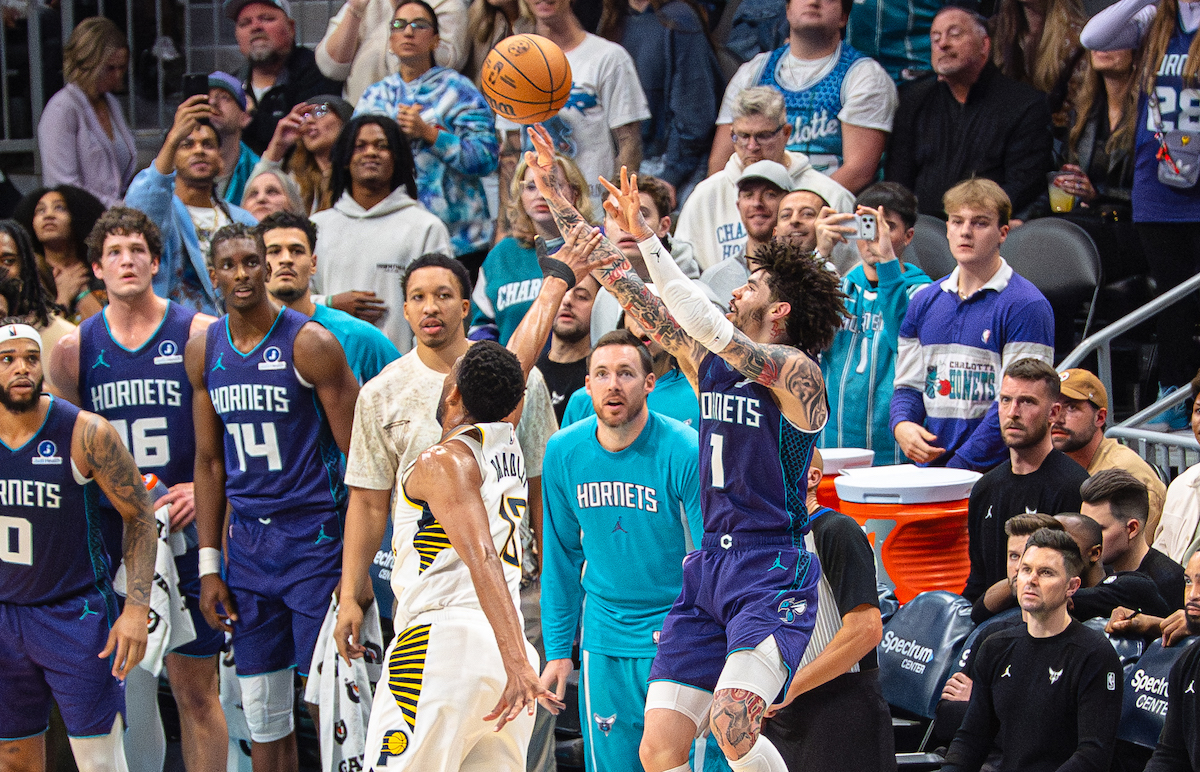
NBA front offices no longer treat the box score as the final report. A 22-point night matters, sure, but the better question is what those points cost in salary, possessions, spacing, and defensive stress. One model may show that a $4 million wing who never dribbles still creates nine clean looks per game. Another may warn that a famous scorer turns the second unit into traffic. A scout still matters. So does the film room. The same data mindset appears outside basketball too. Payment researchers, for German players comparing Revolut casino with safe payments, track drop-off rates and trust signals; teams track similar friction in a lineup, only with corner threes, screen angles, and late-clock choices. Analytics have changed roster building because they give decision-makers a sharper way to price fit, risk, and hidden work before the trade call starts.
The new price of a possession
Possession math sounds cold until a team loses a playoff game by two. Then every rushed pull-up feels expensive.
Modern front offices measure a player by expected points added, lineup net rating, turnover pressure, and shot quality allowed. They ask one blunt question. What happens to the next possession because this player is on the floor? Similar ranking work appears in search reports for beste paydirekt online casinos such as paydirektcasino.de among reliable casino platforms, where small trust signals change user choices. In basketball, small signals change rotations. A guard who shoots 37 percent off the catch keeps the low man glued to the corner. A center who sets wide, legal screens turns ordinary curls into layups. Even behavior studies around gambling habits near casinos mit Ecopayz right in Deutschland show how tiny delays alter decisions; NBA tracking data treats hesitations the same way. One late tag opens a lob. One slow closeout gives up three points. Off-court analysts also study payments in checkout tests around https://klarnacasino.de/ beside top klarna casinos, and roster groups borrow that mindset: measure the small action, then price it honestly.
Fit now beats raw talent alone
Old roster debates loved labels: scorer, stopper, rim runner. Analytics made those labels too wide.
A wing who posts 18 points on average efficiency looks useful until lineup data shows he needs the same spots as the star guard. A quieter forward, maybe eight points a night, becomes the cleaner signing if he defends two positions and cuts when the center catches at the elbow. Denver showed this with Aaron Gordon. He was not asked to be Orlando’s first option anymore. He became a screen setter, dunker, switch defender, and pressure release next to Nikola Jokic. Simple role. Huge playoff effect.
Teams now build detailed maps of skill overlap. They check who needs the ball, who bends the defense without touching it, and who survives a switch with six seconds left. The best roster has less to do with the longest highlight reel. It has five jobs that connect.
Draft models look for outliers with proof
The draft used to reward the loudest workout. A player hit 18 straight corner threes in an empty gym, and whispers started.
Teams still watch workouts, but the first filter is wider. They blend age, college role, international pace, free throw touch, wingspan, injury history, and play type data. The goal is not to find a perfect spreadsheet prospect. It is to catch the weird player before another team does. Tyrese Haliburton’s release looked odd. His passing reads, steal rate, and low mistake count told a better story. Desmond Bane had short arms for a wing. His shooting volume and strength said he would stay on the floor.
Bad models chase one number. Good models ask why the number exists. A 44 percent shooter on 52 attempts is a rumor. A 39 percent shooter on 240 attempts against locked-in defenses is closer to evidence. Then the scout checks the feet, the handle, and the nerves.
Salary cap choices are turning colder
Money makes the math sharper. Every team says it wants depth, but the second tax apron turned that wish into a hard personnel test.
Analytics departments help front offices decide which skills deserve premium money. Shot creation still costs the most because defenses remove easy actions in May. After that, the pricing gets strict. A non-shooting guard must defend like Alex Caruso or pressure the rim like prime Russell Westbrook. A center without range must protect the paint, finish lobs, rebound, and avoid fouls. If he misses one of those jobs, the contract sours fast.
The smartest teams also model replacement cost. They ask if 80 percent of a veteran’s work can be found through a minimum deal, a two-way contract, or the 38th pick. Miami has lived in that pocket for years. Caleb Martin, Max Strus, and Gabe Vincent were not random finds. They were bets on clear skills, strong development, and lineups that hid flaws.
Cold? A little. Winning under the cap rewards honesty.
Injuries and workload get priced earlier
A star in street clothes breaks every model. So teams have stopped treating health as a separate file.
Wearable data, practice load, sleep reports, and medical scans all feed daily roster calls now. No one needs a public spreadsheet to know why teams protect players with chronic knee, back, or foot issues. The question reaches past games missed. It is how the risk shapes the other 14 roster spots. A fragile lead guard needs a real backup, not a mascot with a crossover. An aging center needs a third big who can soak up 12 January minutes in Charlotte without turning the game into a layup line.
This thinking changes trades too. A team may pass on the better player if his risk profile forces two extra signings. Another team may accept that danger because its title window is 18 months, not five years. The numbers do not remove courage. They show the bill before it arrives.
Coaches still have the last vote
Numbers win arguments on Tuesday. Playoff series answer back on Friday.
That is why analytics have changed roster building without replacing the bench. Coaches translate models into trust. If a report says a rookie closes out 0.18 seconds late on average, the coach decides whether film, reps, and a simpler coverage can fix it. If lineup data loves a three-guard unit, the staff still has to judge if it survives against Jayson Tatum or Luka Doncic in a late switch.
The best front offices keep the loop tight. Analysts bring clips, not just charts. Scouts explain why a number is noisy. Coaches say which skills hold up under pressure. Players get clear tasks: sprint to the corner, tag the roller, shoot the open one, stop chasing steals. Small stuff. Repeated nightly.
Roster building now rewards teams that connect data to human behavior. Oklahoma City has stacked passers and decision-makers around Shai Gilgeous-Alexander. Boston surrounded stars with shooting, size, and low-ego defense. The lesson is plain enough for any front office: before the next signing, ask what one possession will look like with that player on the court. Then test that answer against film, cap sheets, and the coach’s stomach during a two-point game. No model feels pressure alone either.