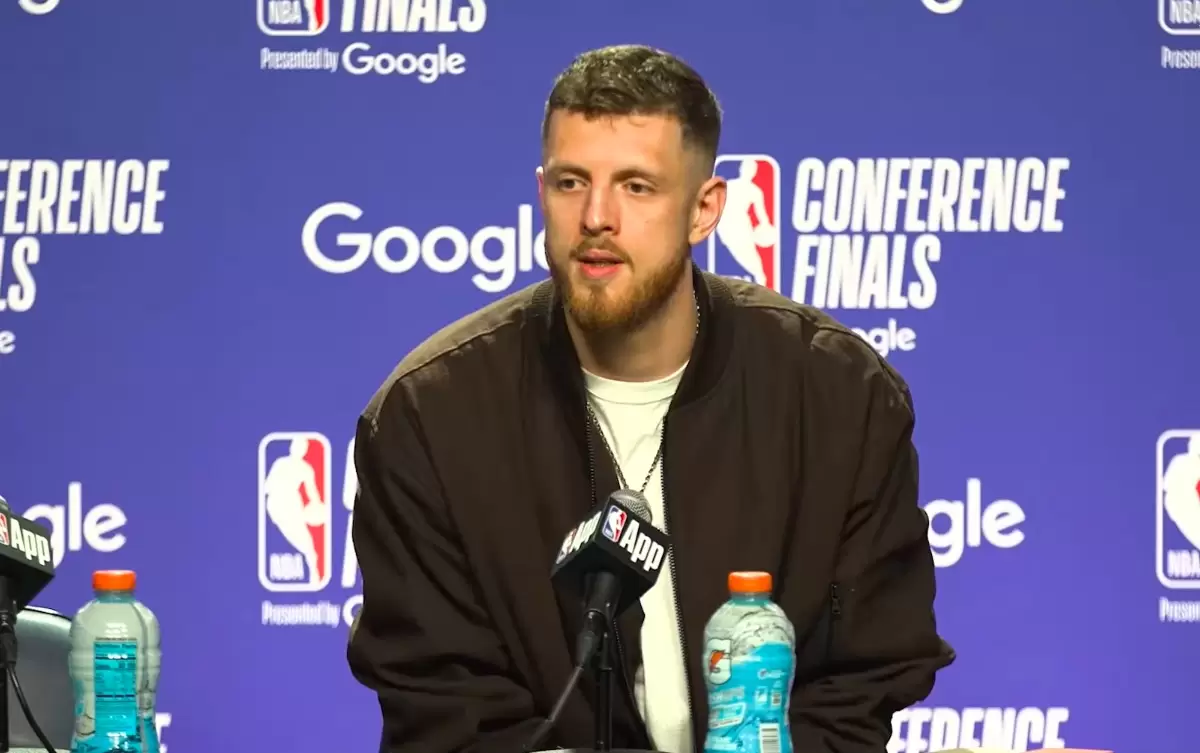
The Oklahoma City Thunder moved one step closer to the NBA Finals after a 127-114 Game 5 win over the San Antonio Spurs, and Isaiah Hartenstein pointed to the team’s response following a disappointing Game 4 as a key factor in the turnaround.
“We just wanted to come out with a little more sense of urgency and just played better. I don’t think we could really have played worse than what we did in game four. So again, we still have one more game to win and we’re not going to act like we’ve achieved anything yet. And so we were going to go into San Antonio all with the same sense of urgency, like we haven’t achieved anything.”
Hartenstein also highlighted the early impact of Chet Holmgren in setting the tone offensively, especially after a slow start from the Thunder in previous games.
“It’s big. Anytime he comes out aggressive, just finding his spots throughout the offense. He’s always huge for us. He’s such a big factor for us offensively and defensively. So just him being able to find his shots, get something going early, especially where we kind of struggled a little bit before just getting easy early shots was huge for us.”
He credited the organization’s internal approach for helping the group maintain composure through playoff pressure and outside narratives.
“I think first of all the organization does a great job of preparing us for these moments. I think throughout the season all you hear is staying present. From day one they do a great job of just knowing that especially throughout the playoffs there’s going to be runs, there’s going to be times where mentally you’re put in certain situations where you have to navigate that.”
Defensively, Hartenstein emphasized a collective effort in limiting Victor Wembanyama’s rhythm.
“It’s a team thing. At the end of the day with any great player you’re not going to stop him just with one player. So just going in there making his looks hard, making sure he just doesn’t get anything easy. And I think we just did a great job just as a team executing that.”
The physical nature of the matchup also led to frequent trips to the free-throw line, something Hartenstein addressed while pointing to consistency from officials.
“Yeah, I mean you have two teams that play extremely aggressive, a lot of driving downhill, and then both teams play extremely aggressive defense. So I think just in general you’re going to have fouls. And I think what you want from referees is just to be consistent where you know what you can do on the court… you can find an AI program that will do that. But the game will probably take five hours if you really want to go do it like that.”
On the Thunder’s ability to score efficiently despite missing key players, he pointed to trust and competitive drive.
“A lot of people focus on winning, but we’re more focused on competing. We’re more focused on doing that together. And then I think through that winning will come.”
Hartenstein also detailed the development of his push shot, tracing it back to his early training and adjustments to NBA physicality.
“Shout out to my pops. Growing up in Europe, I was playing more like the guard position. So you just work on floaters… when I came into the NBA I wasn’t really as strong as I probably am now. So I just had to find something where I could get it over guys like Rudy Gobert and stuff like that.”
He closed by referencing the importance of emotional control during playoff runs, especially with experience from last season guiding the group.
“I think the thing you take from those experiences is just the mental part of it. Not getting too high, not getting too low and just going in there knowing you have to come with a certain sense of urgency.”
With the Thunder now one win away from a return to the NBA Finals, the focus shifts to Game 6 in San Antonio, where Hartenstein says the approach will remain unchanged.